

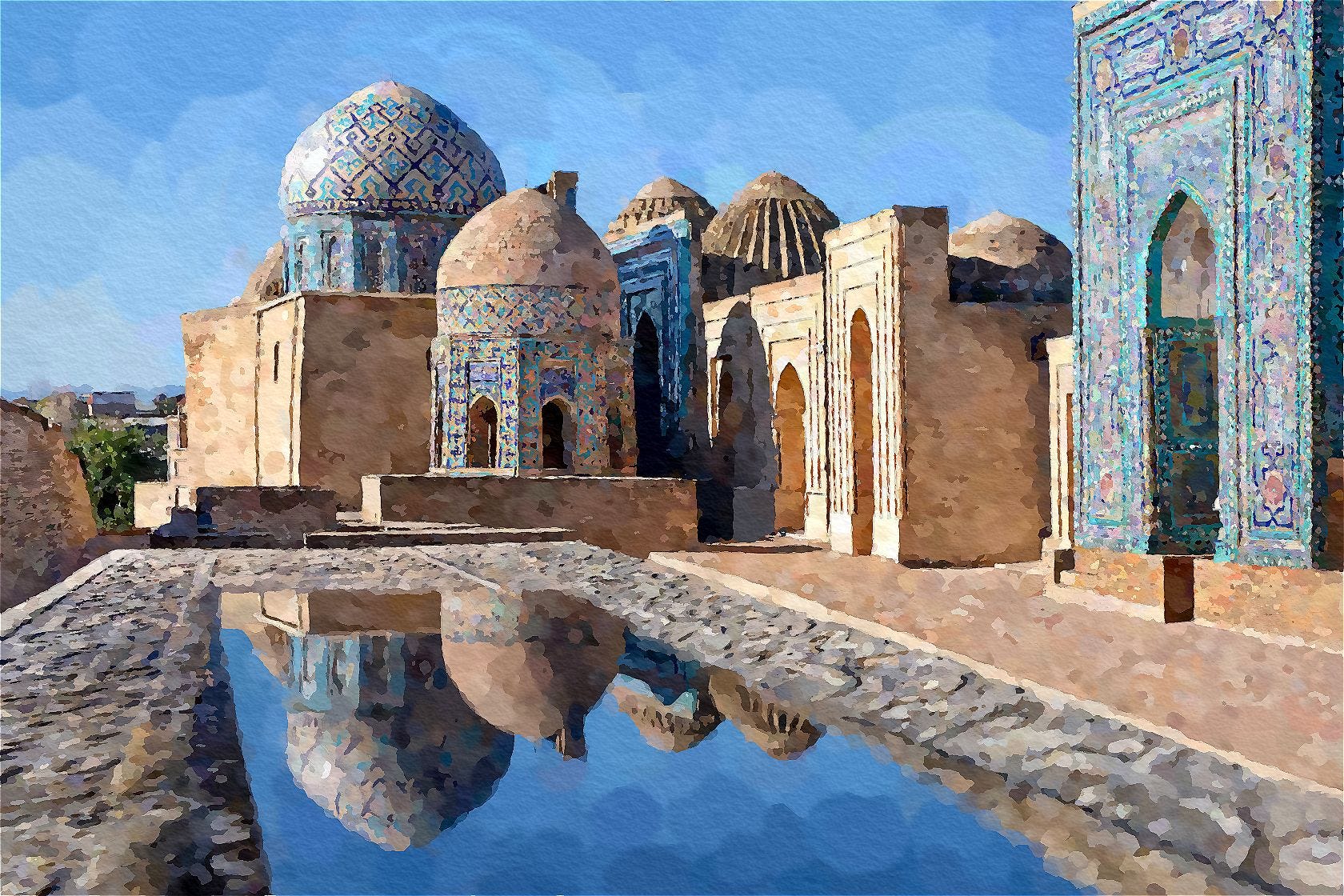
U.S. Secretary of State Marco Rubio has embarked on a visit to Uzbekistan and India that will continue through October 22. Kicking off his trip, Rubio—accompanied by a delegation of over 200 representatives from American companies—will visit Samarkand, Uzbekistan. As one of the oldest cities in the world with a history spanning more than 2,500 years, Samarkand long served as a key hub along the Great Silk Road.
The Secretary of State will meet with the foreign ministers of Kazakhstan, the Kyrgyz Republic, Tajikistan, Turkmenistan, and Uzbekistan as part of the C5+1 platform, which brings together the United States and the five Central Asian nations. The participants will focus on key areas including energy security, investment, expanded commercial cooperation, and economic modernization across Central Asia.
During the summit held in Washington last November, the leaders of the Central Asian nations reaffirmed their commitment to cooperation—a key aspect of which involves granting the U.S. access to rare-earth metals and raw-material supply chains.
According to forecasts by international institutions, the combined GDP of Central Asian countries will exceed the $600 billion mark for the first time. In its macroeconomic outlook for 2026–2028, the Eurasian Development Bank anticipates that its member states will maintain positive momentum, led by Kyrgyzstan (+10.2%), Tajikistan (+8.3%), Uzbekistan (+7.9%), and Kazakhstan (+5.5%). GDP growth in Central Asia is accelerating, even as the global economy slows down amid the conflict in the Persian Gulf.
The ongoing shift of the global economic epicenter toward the Asia-Pacific region is turning Central Asia into an arena for rivalry among major powers. The region has become a focal point for the interests and ambitions of China, Russia, Türkiye, and other states, shaping complex geopolitical dynamics. Central Asian countries seek to diversify their relations with major powers and secure the most favorable conditions possible for further economic and technological growth. In this context, the United States is viewed by these nations as an important counterweight within the framework of their multi-vector policies.
GPS has previously highlighted the growing influence of the region’s countries on global politics—a trend underscored by Kyrgyzstan’s successful bid for a non-permanent seat on the UN Security Council. Furthermore, Uzbekistan is set to succeed Uganda as chair of the Non-Aligned Movement in 2027, a development GPS recently covered.
As part of his tour Rubio will visit the Indian cities of Mumbai and Jamnagar, marking his second visit to India in 2026. The trip will focus on deepening energy cooperation and expanding economic ties.
Global Policy Sketchbook will continue monitoring Rubio’s tour and provide commentary once it concludes.